
Human-Wildlife negative interactions (HWNI) between humans and wild animals are a common issue worldwide as human populations continue to expand into areas that were originally occupied by wildlife. This expansion leads to habitat loss and fragmentation, forcing wildlife to live in closer proximity to human settlements. The consequences of such negative interactions include crop destruction, reduced agricultural productivity, competition for grazing lands and water resources, livestock predation, injury and loss of human lives, damage to infrastructure, and an increased risk of disease transmission between wildlife and livestock. Although there is no permanent solution to human-wildlife negative interactions, their impacts can be significantly reduced through effective management and collaborative approaches. This involves understanding the underlying causes of negative interactions, Human-Elephant Coexistence (HECx) awareness programs implementing integrated mitigation strategies, and engaging local communities as active participants in conservation efforts. By focusing on prevention, mitigation, and coexistence strategies, it is possible to promote a more harmonious relationship between humans and wildlife.

The villagers who enthusiastically watched and engaged with the street play
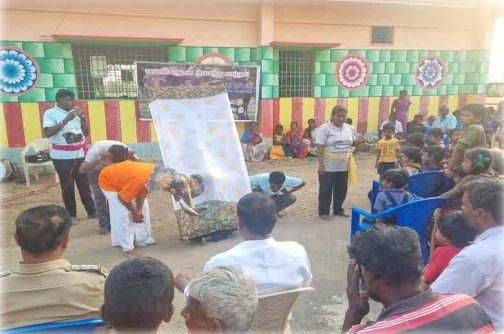
As part of the awareness initiative, 33 Human-Wildlife Coexistence (HWCx) street plays, eight Human-Elephant Coexistence (HECx) street plays, and five school awareness programs were conducted to educate local communities and students about safe practices and coexistence with wildlife between April of 2025 and March 2026. Through street plays and awareness programs, community members and students were thoroughly informed about HWNI and Human-Elephant negative interactions (HENI), including wildlife behavior, causes of negative interactions, and the importance of coexistence. Participants were also introduced to a variety of practical “dos and don’ts” related to wildlife encounters from an individual safety perspective, helping them understand how to protect themselves and their families from potential risks posed by wild animals. These programs provided practical guidance and safety advice for people living in areas where wildlife interactions are common.

Students engaging int he interactive school program
The implementation of activities was occasionally delayed due to the time required to obtain permission from the relevant authorities, but over the year forty-one street plays and five school awareness programs were successfully conducted. The programs reached around 6,000 community members and 400 students. Awareness activities covered 41 villages and five schools across the target areas. Four-hundred elephant booklets in the vernacular/local language and 400 elephant masks were distributed to students as part of the awareness program. Additionally, 6,000 notices containing important “dos and don’ts” for people living in human–wildlife negative interaction areas were distributed to villagers.

Thank you to Zoo outreach for this update from the field!