The week of February 24th the Chiang Mai University (CMU) Mobile Vet Clinic in partnership with the Thai Elephant Association Alliance (TEAA) responded to an emergency involving an elephant that had sustained injuries from drinking herbicide.


The week of February 24th the Chiang Mai University (CMU) Mobile Vet Clinic in partnership with the Thai Elephant Association Alliance (TEAA) responded to an emergency involving an elephant that had sustained injuries from drinking herbicide.

One of the highlights of 2020, on which AES is proud to report, is our committed veterinarians with Chiang Mai University’s (CMU) Center of Elephant and Wildlife Research Mobile Vet Clinic. In March 2019, AES donated a new, second van in order for Dr Khajohnpat and the CMU veterinarian team to treat more elephants in need of care. Last year, with the global pandemic having wide ranging impacts on elephants, elephant camps, and mahouts, the Mobile Vet Clinic continued their dedication to provide aid to elephants in need, sometimes on an emergency basis.
2020 started off with the team heading to Mae Wang district several times in January and February. On those trips, Dr. Khajohnpat treated a young elephant with a chronic leg wound, a 45 year old elephant with an inflamed leg at Ning Tao camp, and at Mae Elephant Sanctuary, he treated an elephant suffering from colic. By March, a trip to all the camps in the Mae Wang district found him doing health checks with other veterinarians on over 600 elephants!


As the pandemic started to hit Asia, and the Thai government began closing all elephant camps to tourists, Asian Elephant Support donated emergency funds to both the CMU Mobile Vet Clinic and The Thai Elephant Alliance Association. But the van continued making much needed medical trips. Dr. Khajohnpat reported early in the pandemic that many camps that contract elephants and skilled mahouts have allowed them and their elephants to move back to their homes and natural forests. Without income from tourists, camps can’t purchase food for the elephants or pay the mahouts.
During the ensuing months, the CMU team made trips to Huay Pakk Kood in Mae Chaem to treat an elephant with an allergic reaction from eating secretions from Ding Hou tree; to Pai District, Mae Hong Son province to treat an elephant with intestinal discomfort, and who was not eating or drinking; and to Karen Elephant Retreat Camp, Mae Tang district to treat an elephant with an eye injury. And, thanks to the many generous donations we received, the Thai Elephant Alliance Association and the CMU Mobile Vet Clinic were able to distribute free medicine for use on their calls, and assemble 30 First Aid boxes for owners’ use with their elephants.
By mid-year, impacts from the pandemic persisted at elephant camps across Thailand. With help from the Tourism Authority of Thailand and the Thai Elephant Alliance Association, the CMU team made a trip to Mae Chaem district in Chiang Mai to hand out some of the First Aid boxes to elephant owners who had decided to take their elephants home when the camps closed down. The team also traveled to a village to make routine health checks on over 20 elephants that had been relocated due to the pandemic.
The CMU Mobile Vet Clinic made a trip to Mae Rim Elephant Sanctuary to treat constipation in a 45 year old pregnant female. After intense treatment for several days, she recovered. Another pregnant female needed monitoring in Mae Jam district, so Dr. Khajohnpat spent the night and did a physical exam. Ultimately, the mother gave birth, but sadly the calf did not survive. The doctor wrapped up August traveling to Karen Raummit elephant camp in Chiang Rai province for health checks on 21 elephants, and then to Hauy Pak Khud village, Mae Jam district to treat a baby elephant with a trunk injury and a mother elephant who had lost her calf during parturition.


September saw the team respond to several emergency calls, including one with the Thai Elephant Alliance Association, where the doctors spent the night treating an elephant suffering from iron toxicity. Other emergency calls were later in September to the Mae Chaem district, to treat a lame 42 year old elephant, perform a necropsy, and to treat a young, seven year old elephant with symptoms of EEHV.
The demand for veterinary treatments during the pandemic became higher than ever this year. AES was asked to provide support for a second veterinarian to handle the increase. In November, we welcomed Dr. Siripat Khammesri, who obtained his Master’s degree at Chiang Mai University and had worked previously at the Mae-sa camp. With a second veterinarian, the CMU van could now reach farther into northern Thailand. By the end of November, the doctors had traveled to Surin multiple times to treat elephants at a festival, and to a Uthai province Buddhist festival to treat a very young calf with EEHV symptoms. They were also called out to Mae Wang in December to assist a mother and her day old calf to start the suckling process. This trip lasted through the night and into the next morning.
The Mobile Vet Clinic put 22,380km (13,906 miles) on the van in 2020, many on rough and slow country roads, proving how essential their service is to the elephants of Thailand. AES could not be prouder to be a part of this necessary team of critical veterinarians and technicians. Despite the challenges facing them throughout 2020, they continued their mission of providing elephant health care for all who need it.
Because AES is so committed to supporting and sharing our CMU veterinarian’s hard work, we need your help to continue their mission.


Dr. Siripat Khammesri with the Chiang Mai University Mobile Vet Clinic
With support from AES, our dear friend, Dr. Khajohnpat Boonprasert from the Chiang Mai University Mobile Vet Clinic, has teamed up with a second veterinarian, Dr. Siripat Khammesri. The two will both be traveling, providing veterinary care and health checks to Thailand’s elephants.
The addition of a second veterinarian is critical, especially during the pandemic that has left many elephants out of work due to the lack of tourists. Owners have taken their elephants back to their home villages and the mobile clinic is spending much more time on the road to care for these elephants.
One of their recent stops was to Surin Province, located in south eastern Thailand. There, the doctors collaborated with the Institute of Elephant Research and Healthcare services, livestock department and with the Thai Elephant Conservation Center. While on this mission, the doctors treated a remarkable 65 elephants!

Elephant from Surin Province surveys CMU Van’s trunk space

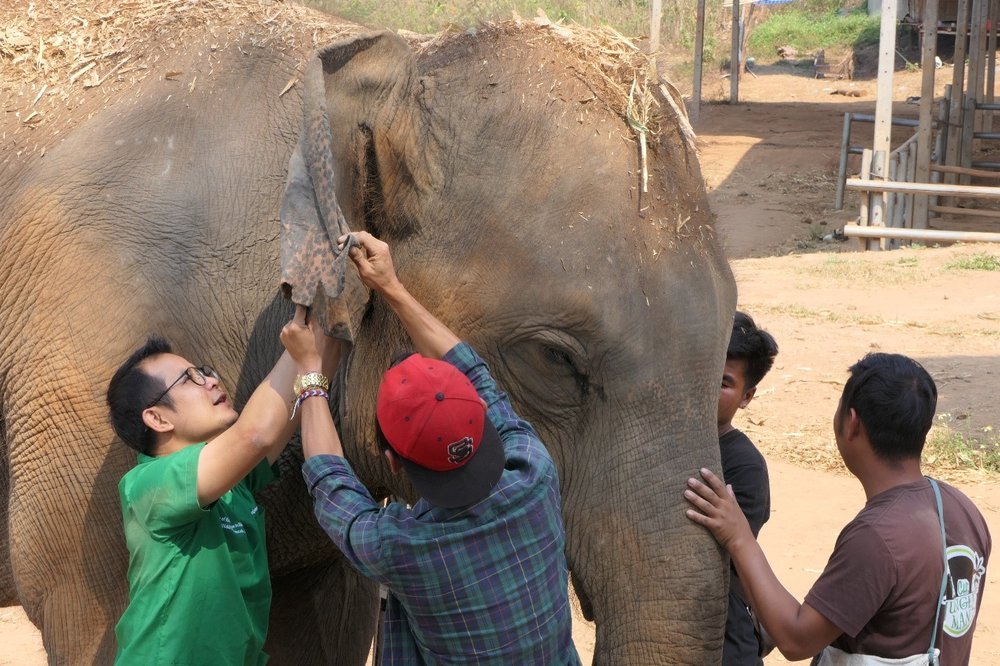
Veterinarians and Mahouts performing blood draw
In the photos from Surin province, you can see the doctors helping the local men and women perform blood draws from the elephants’ ears, which helps in determining an elephant’s overall health.
On the way home to Chiang Mai, they stopped at a Buddhist festival in Uthai Thani province to provide healthcare services for three elephants there. Treatments included NSAIDs for lameness and eye care medications.


Looking ahead, the two veterinarians will be able to travel to an extended area in northern Thailand, and be able to cover for each other for emergencies, on weekends and holidays.
With the use of the transport vehicle, both doctors will be able to serve Thailand’s elephants more effectively. We are proud to watch the vehicle AES donated to the CMU Mobile Vet Clinic be used, both effectively and efficiently. We hope you will follow along with us while we watch the impact of the mobile unit grow. AES thanks our donors who make such efforts happen. Thank you!

In March, tourism came to a screeching halt in Thailand due to the restrictions imposed by the COVID-19 pandemic. This in turn resulted in the tourist camps closing and the mahout owners returning with their elephants back to their home regions, and in many cases to very remote areas.

Almost immediately a partnership was formed by the Thai Elephant Alliance Association and the Center for Elephant and Wildlife Research to provide medical care to all elephants including those that were no longer in areas or camps with veterinarians.
AES provided funding to both the TEAA and the CEWR to help with the additional visits, medicines and supplies that would be needed to help in this crisis. Part of that help was to provide first aid emergency med care boxes to elephant owners so that they could perform some health care themselves. TEAA provided food supplies for the elephants.
Throughout this time a total of 72 kits to help over 1200 elephants across Thailand have been distributed: some for communities where they do have some veterinary practitioners but most for camps and owners without veterinarians. And what do these big blue boxes contain to help Asian elephants? Wound dressing kits, pain killers, gastrointestinal drugs, ophthalmic drugs, vitamins, antibiotic injections, NSAIDS injections, among other medicines.


Dr. Khajohnpat Boonprasert, Center of Elephant and Wildlife Research, Chiang Mai University
If you have been following AES via Facebook and reading previous newsletters you will know that the CMU Mobile Vet Van that AES donated last year to the Center of Elephant and Wildlife Research has been extremely busy during the covid pandemic. In partnership with the Thai Elephant Alliance Association they have been able to help many camp owners and mahouts take care of their elephants when they would not have otherwise been able to afford veterinary care due to loss of tourism income.
Since March 2019 the CMU Mobile Vet Van has traveled about 58,430 km (36,306 miles) with 5,000 km (3,106 miles) of that during the covid-19 pandemic. That is a lot of trips and many elephants that have been helped thanks to the donations made to AES to provide the van as well as provide medical supplies during the crisis.
This month Dr. Khajohnpat Boonprasert of the Center of Elephant and Wildlife Research, Chiang Mai University has reported back about 2 of their recent trips.
“Friday July 3: CMU and TEAA staffs went to Mae Jame district for an urgent emergency case. A new born calf had gotten wound in abdominal and its intestines pulled out. We took 4 hours to arrive at the closest village to the calf. Unluckily, the calf died 2 hours before we arrived. Although, we could not save the baby’s life, we provided health care services for the other elephants there, such as a broken tusk case.”
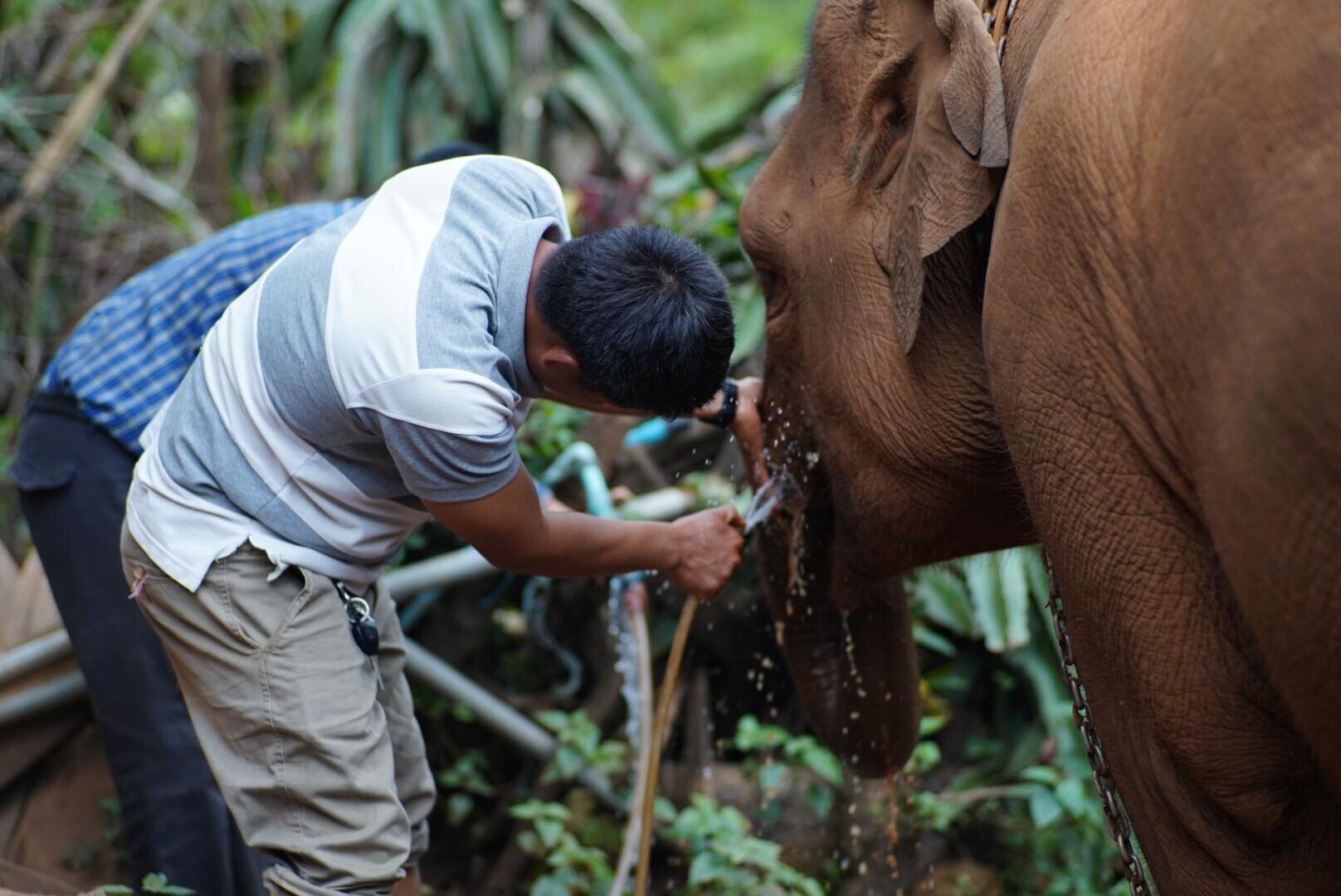
“Monday July 6: Gastrointestinal distress/constipation in Asian elephants
A 45-year-old pregnant female elephant (Pang Tang-Mo) had suffered from GI discomfort in the middle of the night due to GI constipation. She could not pass her stool out normally and gasses in the intestine were continually built-up causing a lot of pain. The mahout team looked after her closely throughout the night. Our team provided intensive treatment with a painkiller, IV fluids, GI stimulants, encouraged movement, and performed rectal enema. She responded to the treatment very well and recovered the following day.
“This problem can be caused by various factors which including improper diet, inappropriate water consumption, low physical activities of elephants, etc. GI constipation/colic can even contribute to the life-threatening to the elephants in some severe cases. So the proper management whether elephant diets or encourage physical activities is very important especially during the COVID-19 pandemic which the activities of the elephant had been changed due to less tourist visiting.”
#ElephantHealthOurHeart

AES is assisting the Center of Elephant and Wildlife Research and the Thailand Elephant Alliance Association in helping elephant owners and camps to provide medical care to their elephants during their loss of revenue due to covid shutdown of tourism. The recent funds that AES has provided were used to provide free of charge medicine for the CMU mobile elephant clinic (that AES provided last year). The funds were also used to provide 30 First aid med-boxes for elephant and camp owners to treat elephants.
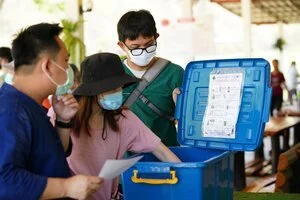
Shown below are some of the blue First aid med-boxes for the owners to treat their elephants. These photos were taken on a recent trip by the CMU mobile vet van to villages in Mae Jam district to help 100 camp elephants.


Dr. Yeaw of the Center of Elephant and Wildlife Research has reported that during the covid-19 outbreak, they have also corroborated with the Thai Elephant Alliance Association for helping elephants that need urgent veterinary services using the CMU Mobile Vet van that AES donated in 2019.
They recently treated an elephant that had been lame and non-weight bearing for many days. During the exam they found a chronic abscess and inflammation. They then opened the abcess, dressed the wound and applied anitibiotic.


In the online part of the course (22 April to 24 May 2019), we learned about anatomy, physiology, nutrition, endocrinology, ultrasonography, anesthesia, restraint, and breeding and parturition management of Asian elephants.
In June we participated in a 5-day practical course in northern Thailand. The first day (10 June) we had lectures on health care management, endotheliotropic herpes virus, nutrition, plasma transfusion and blood cross match at Chiang Mai University in the Faculty of Veterinary Medicine.
The next days were practical training and demonstrations at the National Elephant Institute in Lampang, and Elephant Rehabilitation center, Pang Lah. On 11 June we had presentations on common health problems, tuberculosis, nutrition, and case studies in Sri Lanka and Thailand. From 12 to 14 June we studied rehabilitation, obesity, welfare, anesthesia, practiced using an elephant-like ultrasonography, semen collection, semen evaluation, estrus detection, reproductive hormone monitoring and calf management after parturition etc.
From this trip, we got the opportunity to hear a lot of elephant information and we got to share knowledge regarding elephant health care management from different regions. Therefore, your support is absolutely effective for us and for taking care of our elephants.
Finally, we would like to express our sincere thanks to Asian Elephant Support for your kind support for our trip. Without your support we could not benefit from this training.
Best regards,
Dr. Moe Win Tun
Dr. Zaw Min Htun
Photos from Thailand

Dr. Yaew
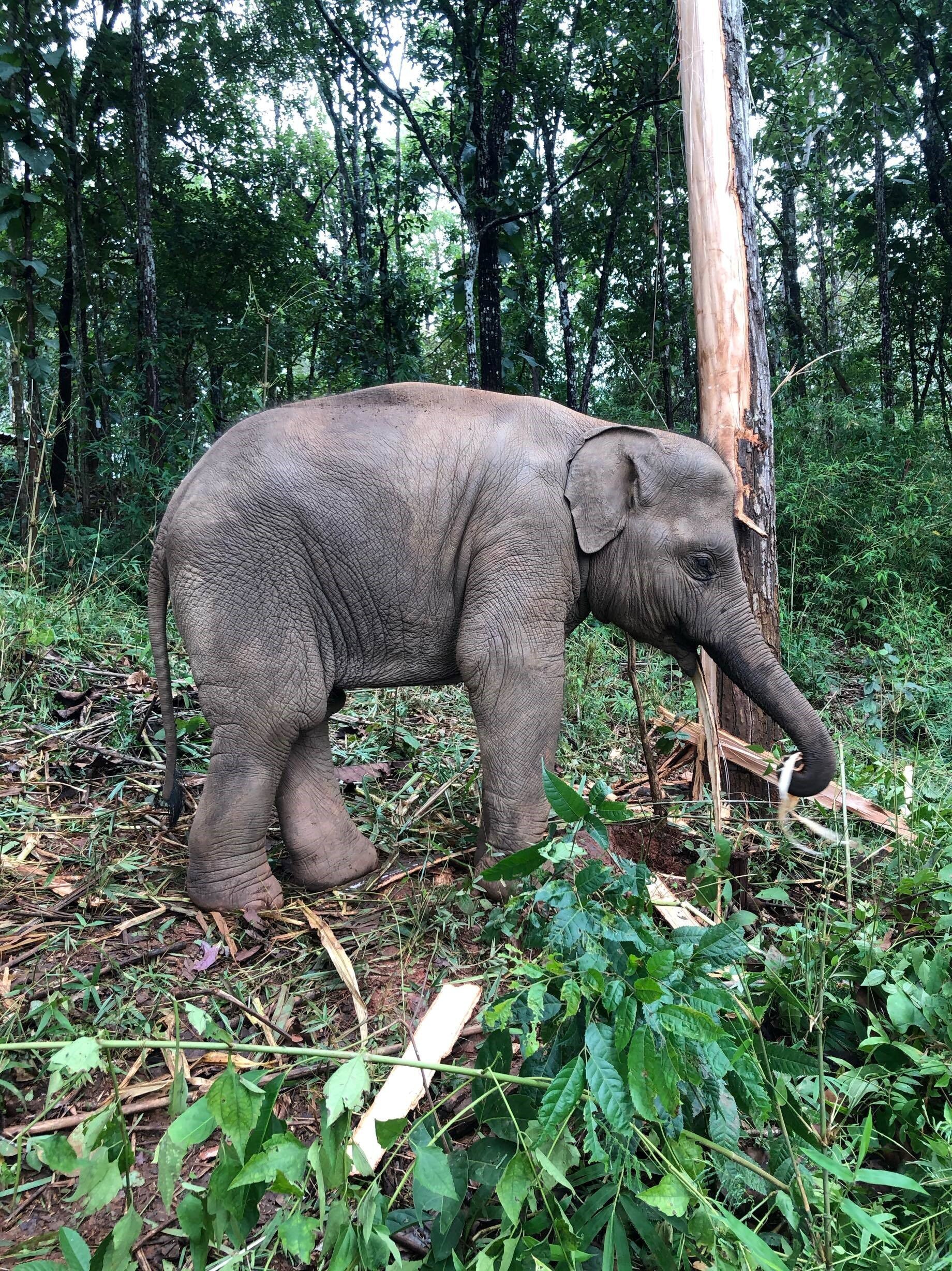
At Johnny Elephant camp, Mae-Wang area for checking baby elephant that show signs of gastrointestinal pain and diarrhea. Dr Yeaw performed antibiotics, pain killers, meds and supplement

Johnny Elephant Camp

At Mataman Camp to provide treatment for a tusker that had respiratory problems
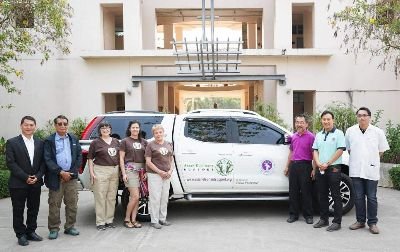
The CMU Mobile Veterinary Van purchased with AES funds has been quite busy since its official inauguration this past March. Here are a few pictures of its progress in helping Asian elephants in Thailand (which, in turn, will extend to solving medical issues for elephants worldwide). Thanks to Dr. Yeaw for providing most of these photos.
You, our supporters, have made this all possible. Many thanks!

The van’s official inauguration at CMU on Thai Elephant Day

Van being blessed by a Buddhist monk

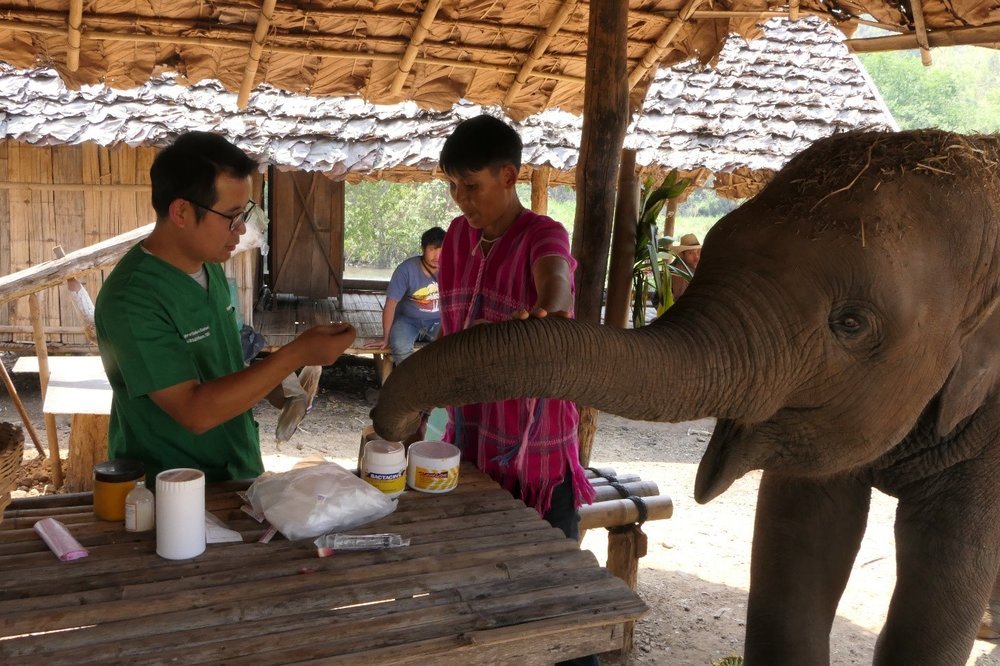
Examining and prescribing treatment at a remote camp

Collecting research data
I had two major objectives when I joined the trip to Thailand for the mobile vet dedication on Thailand Elephant Day:
To see for myself how AES funds are put to use,
To learn more about Asian elephants in one of their range countries.
Let’s just say this trip delivered on these items and more. I met recipients of AES grants: camp managers, workshop participants, the wonderful elephant vets and researchers at Chang Mai University and AES partners. Some funds are used to improve camp conditions for some captive elephants. It was thrilling to actually see the mobile vet van in use, with vets treating elephants at different camps and facilitating research data collection.
I traveled from Chang Mai to Chang Rai in the new mobile vet van purchased with AES funds. If I had to choose a highlight of the trip, this was it. I saw the countryside where the wild elephants reside, visited a number of different types of camps and watched the vets interacting with the patients and clients. I realized firsthand how remote the camps are from elephant medical facilities and experienced that the CMU van was able to handle the rough terrain and winding roads. We met camp managers, mahouts, veterinarians and respected experts in the study of Asian elephants and, yes, even an elephant chiropractor.
Throughout all these travels in the van and a very informative stay at Elephantstay (a great place to learn about the life of a mahout), I don’t think a day passed without seeing multiple elephants. From meting the first Thai calf conceived through artificial insemination named AI, seeing a calf less than 2 weeks old and a cow almost ready to give birth, to treating scrapes, collecting blood draws and checking on a lame elephant - all were part of the job of the mobile vet. At the Friends of the Asian Elephant (FAE) elephant hospital, I even had the opportunity to see an elephant being treated for an injury from a land mine. The hospital has a lab that can produce prosthesis for wounded elephants!
There were so many other discoveries on this trip. I wish I could tell you about each and every one. Overall, I could not be more proud of the people and work enabled through the donations made to AES. It was gratifying to see the vet being able to treat remote elephants in the field. The studies and recommendations of Chiang Mai University are so important to the survival of the Asian elephant in Thailand and elsewhere.



This past March I had the rare opportunity to travel to Thailand for National Thai Elephant Day and the dedication of the vehicle AES purchased for Chiang Mai University's Vet School's mobile clinic. I most treasured my experience with the Thai people – I met so many colleagues in person and spent quality time with them. It is through these human connections we will be able to help ensure the future of the Asian elephant.
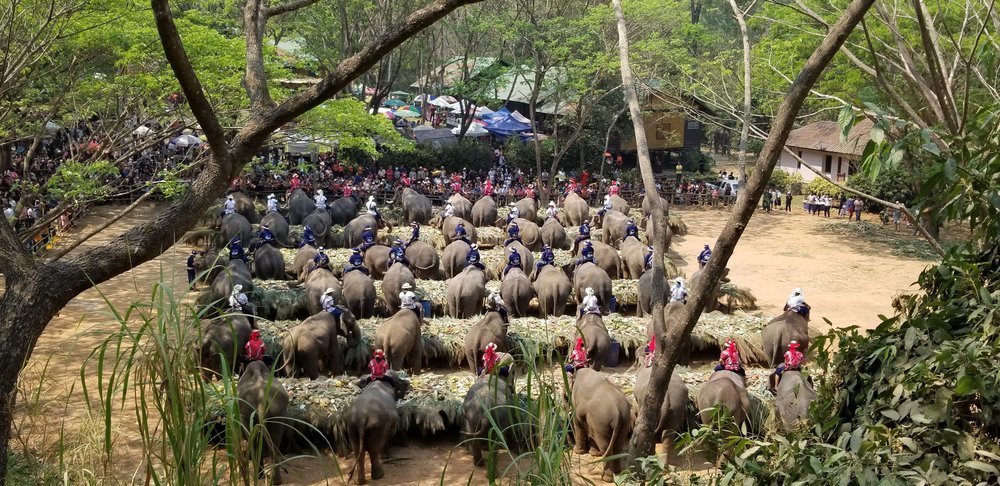
I truly enjoyed seeing how each camp operates differently to manage their elephants. Thailand is so rich in culture, especially elephant culture, that to miss seeing this as a part of their daily lives is to omit an integral portion of their national sense of self. I think I set a personal record: I saw over 140 elephants in one day during the Thai Elephant Day celebration. It was remarkable!
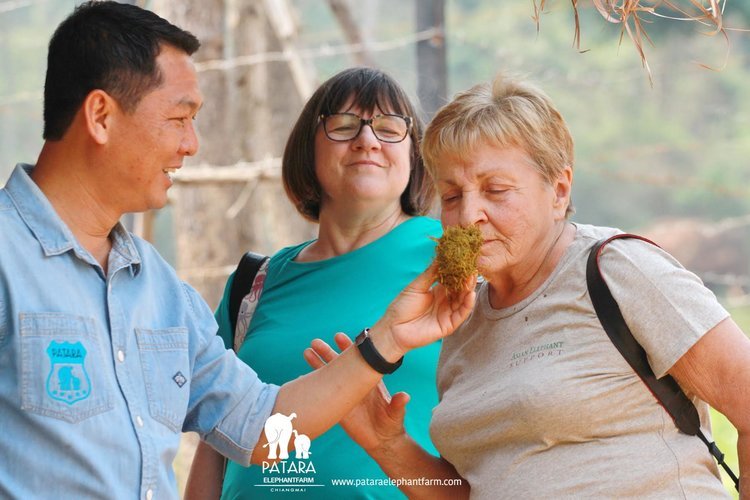
Thailand has a fascinating history, and since archaeology is one of my favorite hobbies, I visited some temples and was captivated by their myths and symbols. Many of the motifs are identical to that of the Maya. I was able to visit the Patara Elephant Farm in Chiang Mai where I participated in their “mahout for a day” program. The staff's educational talks to the participants were informative, demonstrating their professionalism and knowledge. They explained the important difference between animal welfare and animal rights.
I left with a sense of peace and the hope I would return again soon. There is so much work to be done helping people and their elephants. I know it was the beginning of a life-long relationship with the Thai people and their “Chang Baan,” or domesticated elephants.

This was the first trip to Thailand for Janet and Vanessa. I remember my first trip! But that was 2002 and there have been 20+/- trips since then, so my perspective on this trip is a bit different.
From our visit to Richard Lair in Lampang, breaking in the new vet vehicle visiting elephant camps, our visit to Patara Elephant Farm, the vehicle dedication ceremony at Chiang Mai University through the welcoming Thai Elephant Day visits at Maesa and Maetaeng elephant camps and our visit to a Karen camp and John Roberts at the Golden Triangle Asian Elephant Foundation, I experienced the ‘being with’ elephants that made me know on my first visit in 2002, it was time for me to say goodbye to a wonderful 43 -year career with Edward Jones and figure out how to be of benefit to today’s Asian elephant as well as a positive force for their future. I’ve had a lot of help along the way, and so, I wish to use this article to say thank you to some very special friends who are the ‘boots on the ground’ in Thailand – the men and women with the education and expertise, determination and dedication, to a better today as well as the future of Asian elephants. They are: Richard Lair, acknowledged expert on Thai history, culture, language, and elephants; Drs. Chatchote Thitaram and Khajohnpat Boonprasert, Chiang Mai University; John Roberts, Golden Triangle Asian Elephant Foundation; Theerapat (Pat) Trungprakan, Patara Elephant Farm and his lovely wife Anocha (Dao); Julie Ferdinand, a most helpful friend, and an expert canine exporter! My sincere appreciation also to the newer friends and acquaintances made on this trip as they, too, are the hope of the Asian elephant and I am simply humbled to help in whatever small ways AES is able.

Both top and bottom truck pictures are courtesy of Dr. Yeaw
The funding for the new mobile veterinarian vehicle was sent to Chiang Mai University in mid-September. While the vehicle will be put into service as soon as it is ready, the official dedication will be on March 13, 2019. This is Thai Elephant Day and an appropriate (and fun) time to be in Chiang Mai. All directors are invited and we will share pictures, including of the vehicle in service, in our April 2019 Newsletter.
THANK YOU to all who participated in the Tee-shirt campaign as well as otherwise helped raise the funds to make this wish a reality. You are awesome and we can only help people help elephants because you are the ones truly helping!
We are excited to announce a new way to help us purchase a mobile vet truck for Chiang Mai University Vet Department to provide care for the surrounding area's elephants.

Dr. Yeaw performing a blood draw from the ear. Typically blood draws are performed from the ear, but they can also be done on the rear leg while the elephant is standing
Currently they are using one vehicle for 4 veterinarians to make house calls to local elephant camps. AES would like to provide them with a second vehicle to be shared among the vets and to make sure they have a backup in case one breaks down. The campaign is set to run for 10 days, from July 15th - July 25th.
We'd like to sell as many t-shirts as we can so please share this campaign with everyone you know and buy a couple shirts for yourself! This is a special, one-of-a-kind shirt only available for this fundraiser. It features our logo and the EREC logo in white on a charcoal grey shirt.
Thank you and we will keep everyone posted on the progress via our Facebook page!


(Left) Dr. Yeaw performing an eye exam
(Right) Dr. Yeaw with a newly collected blood sample
Thailand is the country where Linda first landed in her quest to see Asian elephants on their home turf. Over the years, many good relationships and programs have offered the opportunity for AES to collaborate and support efforts benefiting both Asian elephants and the people who care for and about them.
Chiang Mai, one of the northern Thailand tourist destinations, is a good base on visits. Long-time friend, Julia Ferdinand, domiciled here, is always good logistics support and the all important ‘wheels’. So, too, this trip.
Our first stop is a long drive for a brief, but very good visit, to catch up with John Roberts at The Golden Triangle Asian Elephant Foundation (GTAEF) base at the Anantara Resort, near the Golden Triangle. Through GTAEF, John offers an excellent and flexible elephant experience opportunity for tourists, while also always alert for programs and efforts to help improve captive elephant care where needed, as well as responding to requests for funding for educational, rescue, and other worthwhile efforts. AES has collaborated with GTAEF on a few occasions and looks forward to doing more together in the future.
The following day we visit the University of Chiang Mai’s Veterinary School. Linda is fortunate to know a few of the staff from our conferences and workshops, and she knows the effort they are making toward advances in elephant health care but had never before visited. After a very good meeting with Drs. Chatchote Thitaram and Chaleamchat Somgird, Dr. Khajohnpat Boonpraseet (“Dr. Yeaw”) takes Linda to Patara Elephant Farm. Linda visited there 10+ years ago when Patara had 4 or 5 well-cared for elephants and great sounding plans. They almost sounded impossible! But, 2018, and Theerapat (“Pat”) Trungprekan has more than delivered on this promise.

Now 57 elephants strong, with three calves born last year and five expected births this year, Patara is helping to stabilize the Thai elephant population. At the same time, a great tourist opportunity is offered. Staff is kind and friendly and both know and respect the animals under their care. Linda saw a comment on a tourist industry website that said, “If your trip to Thailand includes one day in Chiang Mai, spend it here. If not, add a day and spend it here,” and thinks that is some pretty good advice!

The next day, Linda rode along as Dr. Yeaw visited several elephant camps to treat elephants; mostly he is drawing blood to examine the cycling of selected females. First stop is Maetaman Camp. Over the years, Linda has been here many times. At present, they have 60+ elephants, some owned by camp owner, some are owned by others and brought here to work. Dr. Yeaw does 11 blood draws, all to check the cycles of these breeding-age females. The work goes smoothly with all but one elephant waiting her turn quietly and all cooperating like real pros. The one exception squeaked when she felt the needle but otherwise was a good girl. Maybe she’s new to the program! All elephants seen were between their late teens and into their 40s.
Next, we visit Rimtan Elephant Camp, a small camp with just a few elephants and did one blood draw.

A bit farther we stopped at Elephant Carer Home: no draws, no elephants in sight. Just a visit to ‘check in’ and be sure all is good. Then a visit to Elephant Rescue Home where we see 5 elephants: 2 adults and 3 juveniles. Give a tetanus inoculation to one elephant and looked at an inflamed eye on another.
Last stop is Baanchang Elephant Park. Met the woman owner to treat a female elephant who is bossy and a fighter but picked the wrong gal for her last battle, and besides lots of skinned up places, has a horribly swollen front leg Dr. Yeaw is treating. They have 54 elephants there and the facilities are quite new, well laid out, decently designed, and look like good materials and construction. And, these elephants get preventative medicine and have veterinarians on the premise.
No visit to Chiang Mai would be complete without a day trip to Lampang to visit with Richard Lair. An American who has been working in Thailand for more decades than we care to admit at this point, he is a true authority on not only the Asian elephant in Thailand and other Asian countries, but also the Thai history, culture, and language. We are proud he is an AES adviser.

The last day in Chiang Mai concluded with Dr. Yeaw and Pat, owner of Patera, and Linda at dinner. It was an excellent meeting and Linda agreed to help the newly forming Thailand Elephant Alliance (the owners of working elephants) which is being set up to both improve camps where needed and to educate the public on good elephant husbandry as well as the history and culture of Thai elephants and their owners/mahouts. Not sure how she/AES can be of assistance, but we are eager to help where possible.

Mom and calf at Elephantstay
After six days based in Chiang Mai, a last visit to Ayutthaya and the Elephantstay program at the Royal Kraal. Linda always has a horrible time getting tuk-tuk drivers to get her to the right destination. Finally, Ewa and Michelle explain to her it’s her pronunciation – comes out not meaning anything to the driver (who evidently isn’t good at 20 Questions, but sure tries!). It was a short visit, but a good time watching the bulls delivering fodder to the ‘elderly ladies’ in the Elephantstay program and the antics of two young calves.
Personal note from Linda: I always return from any trip to Asia more convinced than ever that Asian Elephant Support has it right. Concentrating our funding in Asia is without a doubt the best investment we – and our donors – can make. Lots of challenges ahead to get these magnificent animals into the next century, but if we look at ‘challenges’ as opportunities for us to put our commitment and resources toward – and with the support and encouragement of you, our donors and friends – we are confident we can be an important contributor to this effort. Thank YOU – for helping us help elephants.
In July we will commence a campaign to provide The Center for Excellence in Elephant Research and Education a second vehicle. Stay tuned!
In November 2016, AES president Linda Reifschneider attended the second meeting of the Asian EEHV Working Group, a group of veterinarians, elephant managers, researchers, and mahouts who are committed to providing the best care possible for elephants. In our February 2017 Newsletter we gave an overview of Elephant Endotheliotropic Herpesvirus (EEHV) and its devastating impact on Asian elephants, especially young calves, worldwide.
However, we are Asian Elephant Support, and the meeting was an eye-opening but honest wakeup call about how very much needs to be done throughout the Asian range countries to prevent deaths due to EEHV. There the largest number of Asian elephant calves is born and, tragically, many are dying without proper diagnosis of EEHV, much less the needed equipment, supplies, and training - not just of veterinarians but also of mahouts and owners – to enable them to both identify the disease and be able to initiate treatment in the very narrow window for possible survival.
To this end, AES has made their first commitment of $3,000 to cover the airfare of six participants in a three-day training workshop at Kasetsart University in Thailand. This laboratory is well-equipped and easily accessible to participants traveling internationally from the range countries. The workshop will provide training in the molecular diagnostics of EEHV, as well as educating the attendees in sample collecting and planning for EEHV cases.

Polymerase chain reaction (qPCR) machine
The second phase of this project is to support the travel of two or three of the participants from the first training workshop to additional Southeast Asian countries to implement secondary workshops for more wildlife health professionals. This approach will increase the region’s capacity to continue providing training in EEHV diagnostic techniques, allowing for the training of others in their own labs. To date, individuals from Kasetsart University (Thailand), National Trust for Nature Conservation (Nepal), and University of Peradeniya (Sri Lanka) are willing to serve as secondary trainers. They plan on training a total of 15 additional researchers in ten labs in Asia to perform the molecular diagnostics for EEHV.
Only 30,000 to 50,000 Asian elephants remain in the wild, scattered across fragmented habitats in 13 Asian countries. EEHV is a significant threat to the survival of this vulnerable species. The formation of the Asian EEHV Working Group together with the National Elephant Herpes Laboratory (NEHL) providing training, chemical reagents, and diagnostic equipment in Southeast Asia – with the collaborative support of AES and other organizations – is a critical step toward successfully confronting this disease in Asian range countries. Make no mistake; it won’t be easy or quick. But almost 100 cases have been confirmed in Asia to date, with many more deaths suspected but unconfirmed because of the difficulty of diagnosing EEHV in wild elephants and the lack of testing capacity in the range countries. After accurate diagnosis in the lab comes training in the field, for owners and mahouts to be able to identify and respond in the small window this disease offers for possible survival.

Laboratory equipment
AES will continue to help with funding as applicable and possible. To this end, any supporters who would want to make a gift to AES specifically toward this effort can note on their checks or PayPal donations “EEHV”. Thank you!
This past summer we were happy to help Dr. Htun participate in the Asian Elephant Health, Reproduction and Breeding Management Workshop in Thailand. The workshop was divided into three portions: one week online, one week examinations, and lastly, one week hands-on practicals in Thailand. Dr. Htun was able to learn about foot care in addition to ultrasound checks for pregnant elephant cows.
The meeting was held at the Faculty of Veterinary Medicine, Chiang Mai University, June 11-12, 2015. Asian Elephant Support was delighted to be able to fund Dr. Vanthinh Pham’s attendance at this meeting. You may recall most recently AES, with the Golden Triangle Asian Elephant Foundation, sent Dr. Khajohnpat Boonprasert and two senior mahouts from The Elephant Conservation Center in Lampang, Thailand, to Vietnam to assist Dr. Pham in the treatment of the young wild bull, Jun, whose foot was badly damaged by a snare. The mahouts also helped demonstrate to the Vietnam mahouts, who had little experience with wild elephants, how to help calm and better manage Jun for safe and effective medical care.
The meeting at the Chiang Mai University addressed establishing a comprehensive strategy and long-term plan for improving the management systems within elephant tourist camps across Southeast Asia. Attendees also had the opportunity to share and learn from each other’s experiences and promote the best practices in elephant tourist camp management, and to build a network of captive Asian elephant experts who can work towards the goal of establishing and monitoring improved management systems in tourist camps.

Dr. Pham found the presentations that addressed setting up medical buildings with laboratories, health care, feeding and training for elephants, as well as mahout training most informative and was able to return to the Dak Lak Elephant Conservation Center in Vietnam with many useful ideas.
We at AES believe assisting those helping elephants develop friendships with others doing likewise is an important way to improve both the care the elephants receive as well as the knowledge and confidence so important for the veterinarian and mahout. We couldn’t do this without you. Thank you for your confidence and support!

Think Elephants International (TEI) is a non-profit organization that aims to conserve Asian elephants through scientific research and education programs. TEI's founder, Joshua Plotnik, PhD, has been studying elephant cognition for the past few years. Two of his most notable studies scientifically prove that elephants can self-recognize, and are capable of complex cooperation.
Last year, TEI started an after school club for middle school students in New York City that taught students the scientific research process, as well as the importance of environmental conservation. Through the use of Skype, these students saw what life was like for elephants and their mahouts (caretakers) in Thailand. This club also had several guest speakers, and took a field trip to the National Zoo to get an up close and personal experience with the elephants.

Because this was such a success, TEI is looking to expand their program globally. They will especially focus on implementing the program in Thai schools, as young Thais have great potential for conserving their elephants and their environment. These students will get a full understanding of the complex situation that many Asian countries are facing by focusing on topics ranging from culture and language, to perceptions of animal welfare and conservation interests. Through this experience and education, these students will be better prepared to deal with the issues surrounding Thailand and its environment when it is their turn to make the decisions.
AES awarded TEI $2,000 for the purchase of an Apple computer and a television that will be used in Thai schools to help educate students about the importance of elephant conservation. Part of AES's mission statement is to increase awareness of the needs and future of the Asian elephant, as well as to provide educational opportunities to those persons who care for captive Asian elephants in range countries. We are very excited by the potential TEI has to positively shape the future of captive and wild elephants and the people with whom they share land.
For more information regarding TEI, please visit their website at: www.thinkelephants.com.

We wanted to provide our loyal supporters with an update on the flooding in Ayuttaya, Thailand where Elephantstay is located. So many animals and people were affected (and too many died) throughout Thailand, and our friends at Elephantstay have suffered substantial flood damage.
We’ve been keeping in contact with Ewa and Michelle who live in Ayuttaya at the Royal Kraal. The flood waters had fully submerged ElephantStay and the Kraal for weeks on end. In an update on November 23rd, we learned the water had receded from inside the Kraal, but it needed to dry before anything further happened and the moms and calves were still stranded on the wall. By the 28th, the moms and calves were in the process of moving back to the Kraal and the Nursery was finally dry, but Elephantstay was not. The office was completely destroyed.
While it is an immense relief that the waters have finally begun to recede, now begins the hard part of rebuilding something that was already so functional and a part of many visitors’ memories. Of course, rebuilding will take time, patience, and a whole lot of money. So, if you’re looking for a way to help, please consider Elephantstay. They will use every penny that’s sent their way.
We would like to send a special thank you to those who have already donated money to help Elephantstay and the Kraal. Your money is being put to good use and is greatly appreciated! Thank you for your support. Together, we are helping lighten the burden this flood has put on the shoulders of the Elephantstay staff.

Field where the elephants used to sleep
In 2010, the Royal Elephant Kraal in Ayutthaya suffered devastating impacts from flooding. Flooding meant evacuation for both people and elephants.
The people who live and work with the elephants moved to wherever they needed to be to provide care.The cost for recovery was high and the work to rebuild was hard.
Elephantstay team hut
On top of the damage from floodwaters, they had to turn away many visitors with the ElephantStay program, so it was devastating on all fronts. Asian Elephant Support collected donations to help the Kraal rebuild.

Elephantstay team hut
2011 was another devastating year. So many animals and people were affected (and too many died) throughout Thailand, and our friends at Elephantstay suffered substantial flood damage. The flood waters fully submerged ElephantStay and the Kraal for weeks on end. AES helped again with a fundraising campaign.
In the midst of this disaster in 2010 was a reason for celebration. To the delight of many, a baby girl named Sai Chon was born to Pang Pootson. Fortunately, she was healthy and strong. Because the temporary field was not an good place for a baby, Sai Chon and her mom had to walk back to the historic Kraal where the other moms and babies were staying. The road was closed due to flooding, so they had to walk on their own, but with quite an entourage of mahouts and admirers who stopped often to make sure Sai Chon and mom got enough rest. To see more pictures please follow this link.

Sai Chon is blessed
