
The month of March saw a collection of lameness cases, some constipation cases, and one case involving a wound. According to one of the vets with the CMU Mobile Vet Clinic, the region is entering the summer season this month, and they have started to see some health issues in the elephants. The elephants tend to experience bloating due to drier food and reduced water intake during this time of year. Dr. Tida reported, “ I recently visited a camp to provide medication and fluid therapy, and I’m happy to share that the condition has now improved.”
The first case of the month was A 55-year-old female elephant who was re-examined on 5 March 2026 for follow-up of a swollen limb. A fine needle aspiration (FNA) was performed and the sample was submitted for cytological examination. The results indicated inflammation. Treatment included administration of anti-inflammatory medication, topical massage medication, and the owner was advised to continue applying the topical treatment regularly.
The following day, the CMU team attended to a 31-year-old pregnant female elephant near term who presented with lameness, showing a limping gait. Initial advice was to perform warm compression and apply topical liniment massage. On physical examination, the elephant was able to bear weight better compared to the first day the issue was identified by her mahout. The left carpus could not fully flex and showed mild swelling on palpation, but no increased warmth or external wounds were detected. Treatment included therapeutic ultrasound massage applied to three points for 5 minutes each to help relax the muscles and reduce swelling. Continued warm compression and topical massage were recommended.
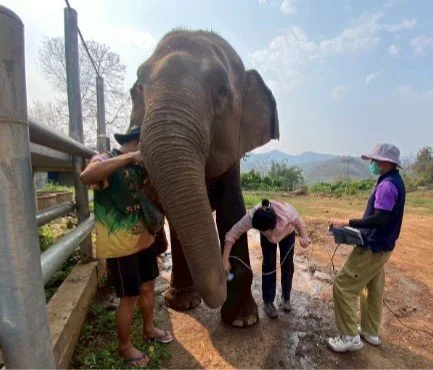
Ultrasound massage being applied to treat inflamed carpus joint
A 22-year-old female elephant was presented with a detached nail. According to the mahout, the elephant had possibly stumbled or stepped on a branch. The elephant maintained normal appetite and defecation. On physical examination, the elephant was bright, alert, and responsive (BAR), with normal weight bearing and gait. The first nail of the right hind limb was found to be detached, without evidence of bleeding or purulent discharge. Treatment included nail trimming and wound dressing. Analgesics were prescribed for pain management. The owner was advised to keep the elephant standing on a clean, preferably concrete surface, maintain proper wound hygiene, and perform daily foot soaking once per day.
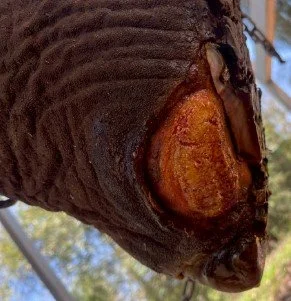
Toe after detached nail lamia was removed by vets
A female elephant in her early twenties from Mae Wang was reported on March 27 with signs of acute gastrointestinal discomfort, including restlessness (frequent lying down and standing up), anorexia, and reduced water intake since the morning. The history revealed ingestion of relatively dry corn stalks and low water consumption the previous day. Physical examination showed trunk biting, an open-mouth posture, and recumbency without abdominal distension. The mucous membranes were pale pink, gut sounds were present, and rectal palpation revealed excessive mucus with mild dehydration. Treatment included intramuscular analgesic medication, an enema, intravenous fluids, and digestive medication. The elephant was prescribed continued oral digestive medication and was advised to engage in walking (30–60 minutes) and water immersion. By the follow-up visit two days later, the elephant showed clinical improvement, with spontaneous defecation and an increased appetite, consuming tamarind and banana stems.
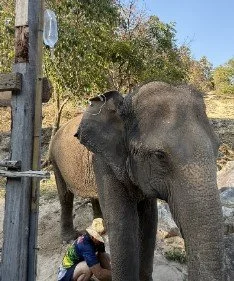
Cow receives intravenous fluids to help rehydrate during gastrointestinal constipation
One case in March was quite different from the others. An 8-year-old male elephant was reported to have a wound on the forehead that had persisted for approximately two years. Initially, the lesion was infected and the elephant was admitted to the elephant hospital for treatment. After clinical improvement, the elephant returned to the camp, where daily wound cleaning had been performed by a veterinarian. However, purulent discharge continued to be present without a foul odor. Physical examination revealed a wound approximately 15 × 15 cm in size with a relatively small opening, making thorough cleaning difficult. For treatment and further investigation, wound samples were collected for bacterial culture and antimicrobial susceptibility testing. The wound was surgically incised to enlarge the opening, followed by wound dressing and topical antibiotic application. On follow-up, a physical examination revealed a new 10 cm incision above the initial wound, with purulent discharge and malodor present but no active bleeding. The treatment consisted of wound dressing, followed by laser therapy, and topical application of antibiotic.
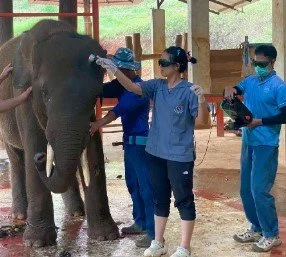
Young bull receives laser therapy to treat wounds on forehead
The professionals of the Chiang Mai University Mobile Vet Clinic continue to provide top notch care for elephants in all states of health. We are so grateful for their efforts to provide care for Thai elephants of all ages! Donate today to support the care of Thai elephants.