
May seems to have been an emotionally trying month for the Chiang Mai University Mobile Veterinary Clinic team with highs but also several lows. Last month was marked by the loss of three separate calves all under the age of four to EEHV 1. It’s a devastating blow to those who love and work so hard to help elephants thrive in the highlands of northern Thailand. The cases show both the similarities that are characteristic of EEHV 1, but also some of the challenges in treating calves at that age. On the flip-side, the team reported on the happy occasion of a new calf birth and the successful treatment of a calf with parasites.
A 3-year-old female elephant calf was reported by the owner to have developed lethargy during the afternoon of May 10, 2026. The calf exhibited anorexia, refusing to consume grass and ingesting only small amounts of bananas and water. On the morning of May 11, 2026, the elephant remained lethargic and anorexic. Initial physical examination revealed marked depression, drooping of the trunk, facial edema, eyelid swelling, and lingual edema. The tongue appeared cyanotic, pale, and dry. Pulse revealed a weak pulse upon palpation. Rectal temperature was recorded at 99.8°F. All of these symptoms, classic signs of EEHV 1. Supportive and symptomatic treatment was initiated, including administration of several medications including: an antipyretic (fever reducing), an anti-inflammatory, and an analgesic along with Vitadex (for nutritional support) due to signs of abdominal discomfort and cramping. Subsequently, arrangements were made for referral to the Thai Elephant Conservation Center, Lumpang for further diagnostic evaluation and treatment. Unfortunately, during preparation for transportation and transfer to the referral hospital, the elephant’s clinical condition progressively deteriorated and the calf subsequently died prior to being loaded onto the transport vehicle.
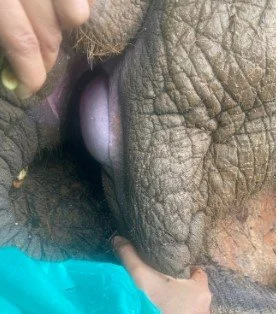
Characteristic swelling and cyanosis of the tongue from EEHV
Later in the month, two more calves were struck down by EEHV 1. On 28 May 2026, a 2-year-3-month-old calf elephant showed signs of depression and reduced appetite beginning in the morning. The owner reported that the calf was still able to consume small amounts of bananas and grass and was drinking some water. On initial physical examination, mild facial swelling was observed; however, the tongue remained pink with normal coloration. Rectal temperature was 101.4°F. Blood samples were collected for complete blood count (CBC), blood chemistry, and EEHV testing. The veterinary team also coordinated with the Elephant Hospital, TECC for referral and further treatment. While waiting for transportation, the calf was administered Tolfenamic acid for fever reduction and Vitadex as supportive therapy. In addition, Acyclovir was provided to the mahout in case the calf was able to take the medication during transport to the hospital. Sadly, after being referred to the Elephant Hospital in Lampang for continued treatment, the calf elephant died on 30 May 2026.
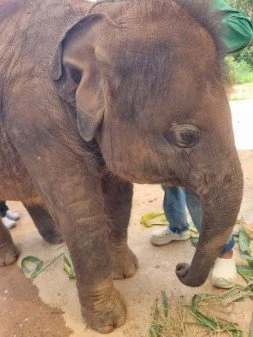
Calf with mid facial swelling due to EEHV infection
In the same region of Mae Wang, another 3-year-old elephant calf had been showing signs of depression and diarrhea since May 27, 2026. The calf also exhibited abdominal discomfort and decreased appetite. The owner suspected soil ingestion and administered activated charcoal powder and an anthelmintic (antiparasitic). On May 28, 2026, the owner reported that the calf remained depressed, but had started eating small amounts. The feces were loose, dark in color, and contained visible parasites. The owner, therefore, requested a veterinary examination. Upon initial physical examination, the calf appeared depressed. No facial edema was observed, and the tongue remained pink with normal coloration. The body temperature was 100.7°F, indicating pyrexia. Blood samples were collected for CBC, blood chemistry, and EEHV testing. Treatment was initiated with Tolfenamic acid (antipyretic), Hyoscine to relieve abdominal cramping, and Catosal (to stimulate metabolism and provide Vitamin B) as supportive therapy. In addition, Acyclovir was prescribed due to suspicion of EEHV infection. The owner was advised to closely monitor the calf, ensure access to clean drinking water, promptly remove feces to prevent re-ingestion, and prevent further soil consumption. Later that day, blood test results revealed low blood platelets and the EEHV test was positive for EEHV type 1. The veterinary team then coordinated with the owner and the Elephant Hospital, TECC for referral and further treatment. Sadly the calf died the following day at the hospital, on May 29, 2026.
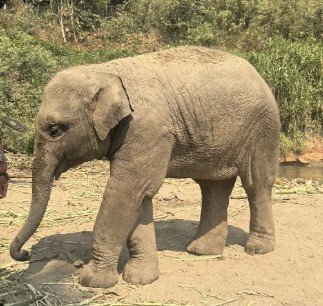
Calf exhibiting lethargy, but no facial swelling
Mobile Vet Team on 19 May, 2026 shows just how much other illnesses can look like EEHV. The owner reported that the elephant calf appeared lethargic and had a reduced appetite, but was still nursing normally from its mother. Upon examination by the veterinarian, the calf showed mild lethargy. The mahout reported that during the night the calf had been lying down intermittently, but only for short periods. The calf also had a history of regularly drinking water from the river and had never been dewormed. Physical examination revealed a body temperature of 102.2°F. Feces were watery diarrhea containing roundworms, and the mucous membranes were pink. After the initial examination, treatment was administered. The mahout was advised to encourage the calf to drink clean water frequently to compensate for fluid loss from diarrhea, provide bathing to help reduce body temperature, and regularly remove feces containing expelled parasites to prevent re-infection. In addition, a blood sample was collected to rule out EEHV. Thankfully, in this case the blood test result for EEHV was negative! At the second follow-up visit, the calf’s activity had increased and the calf had begun to eat bananas. The mahout was finally able to administer the antiparasitic for round worms. And on the third follow-up the calf was nursing normally, eating grass, and there was no sign of parasites.
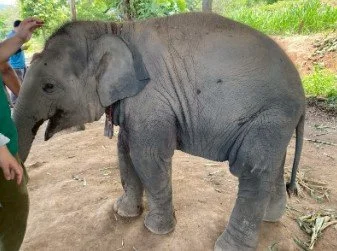
Young calf coping with parasites
On May 14, 2026, an owner reported that a full-term pregnant elephant showed signs of restlessness, frequently standing up and lying down. The mucus plug had been expelled on May 13, 2026; however, the fetal membrane had not yet ruptured. Upon examination by the veterinarian, both mammary glands were enlarged with milk dripping from both teats, and continuous urine dribbling was observed. Supportive treatment was provided and the mahout was advised to isolate the elephant in a quiet area free from disturbances and to closely monitor her condition. In addition, a blood sample was collected to evaluate calcium levels and assess the risk of hypocalcemia (low calcium levels which could hinder the muscle contractions needed for labor). The results revealed that the calcium level was within the normal range. The elephant subsequently gave birth during the night of the same day to a healthy female calf, and the mahout was able to assist the calf in suckling successfully.
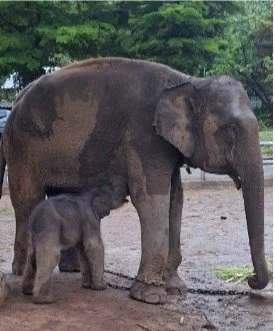
Mom nursing her brand new calf
The professionals of the Chiang Mai University Mobile Vet Clinic continue to provide top notch care for elephants in all states of health. We are so grateful for their efforts to provide care for Thai elephants of all ages! Donate today to support the care of Thai elephants.