
The veterinary staff of the Chiang Mai University Mobile Vet Clinic remain busy. As the months turn warmer, they are already experiencing summer in Thailand. Thankfully, the team only had a handful of cases to respond to this month. In addition to responding to cases, they also had the opportunity to prepare for future emergencies.
One case early in the month involved an elephant with a wound on the right cheek. The day before the elephant
was accidentally tusked by another elephant, resulting in a wound on the lateral cheek area. Since the incident, the elephant had remained bright, alert, and responsive (BAR), with a normal appetite, normal water intake, and normal defecation. On physical examination, mild swelling was observed around the wound without active bleeding or purulent discharge; some necrotic tissue was present, and the elephant showed pain on palpation of the affected area. The vet cleaned and dressed the wound, and followed it up with laser therapy to promote healing and reduce local inflammation.
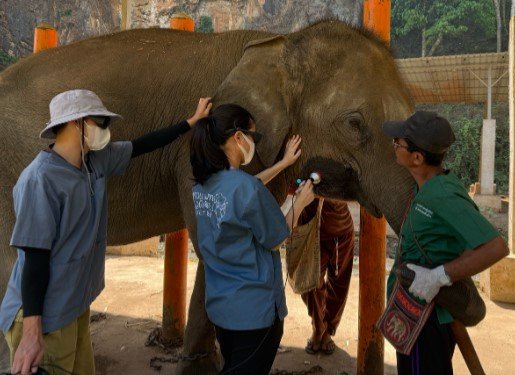
The veterinarian performed laser therapy for reducing swelling
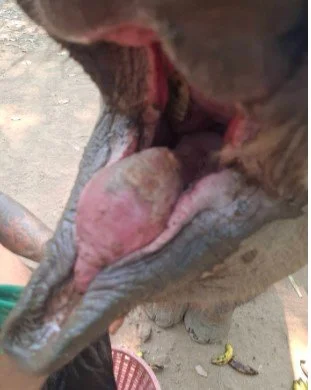
On 22 April, the owner of a 1-year-6-month-old female elephant calf from an elephant camp in Mae Wang District reported excessive salivation. The calf had developed hypersalivation and tongue swelling since that morning, although she remained bright and alert with a normal appetite, but had difficulty eating because of the swollen tongue. The previous night (21 April), the mahout had moved her tethering area closer to the forest, raising suspicion of ingestion of a plant containing calcium oxalate crystals, which can cause oral irritation and pain. Physical examination revealed that the calf was BAR, with no facial swelling, marked salivation, a swollen and reddened tongue, but no fever, and she had normal defecation. Supportive treatment was initiated with analgesics, antacid medication because the calf was eating poorly, and vitamin C at 5 tablets per day to provide antioxidant support. The mahout was advised to rinse the calf’s mouth with normal saline, monitor the condition closely, administer medications and vitamins once the calf was able to eat, and prevent access to unusual objects or potentially toxic plants. On follow-up the next day, the tongue had started to slough, but the calf remained bright, continued nursing, ate bananas, and maintained normal feces without mucus or blood. The owner preferred continued supportive care at the camp, as oral medications could still be administered. By the following day, the calf’s tongue had improved significantly, returning to a pink color, and she became more active with increased food intake.
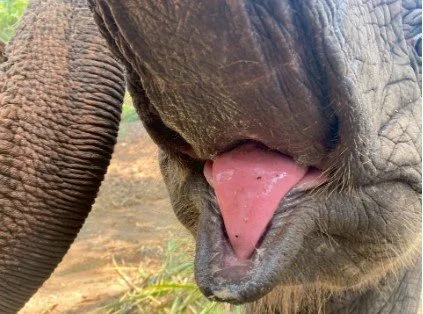
Left: The Calf’s tongue appeared red and swollen
Right: The following day, sloughing of the tongue mucosa was observed
On April 21, the center of elephant and wildlife, in collaboration with a private elephant camp in Mae Taeng District, collected blood from a healthy elephant to prepare fresh frozen plasma (FFP) for future use in sick elephants. The general procedure involved finding a suitable donor elephant, health screening to ensure donor health, collection of blood, and then processing the blood down into plasma for future transfusions.
The suitable donor elephant had to meet the following criteria:
1. Clinically healthy with no signs of illness
2. Not pregnant, not nursing, and not lactating
3. Not in musth
4. Between 20–50 years of age
5. Body weight over 3,000 kg (6,600 lbs)
6. Able to be restrained for longer than 1 hour
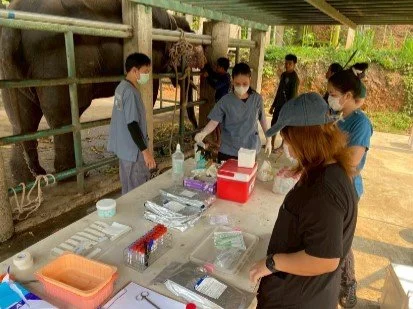
After selecting a suitable donor, blood was collected for health screening, including complete blood count (CBC) and blood chemistry analysis. Once it was confirmed that the elephant was healthy, the equipment and staff were
prepared for blood collection. A total of 25 blood bags, each containing 450 mL, were collected. The blood was then processed to separate the plasma, which was stored as fresh frozen plasma at -20°C. The plasma can be stored for up to 2 years and can be thawed for use in elephants requiring plasma transfusion in the future.
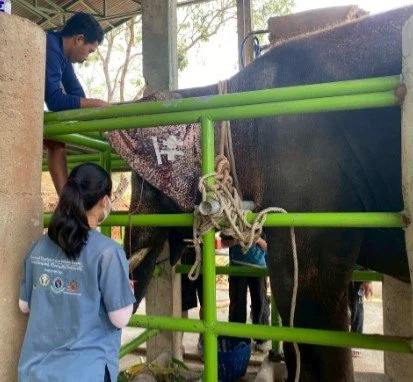
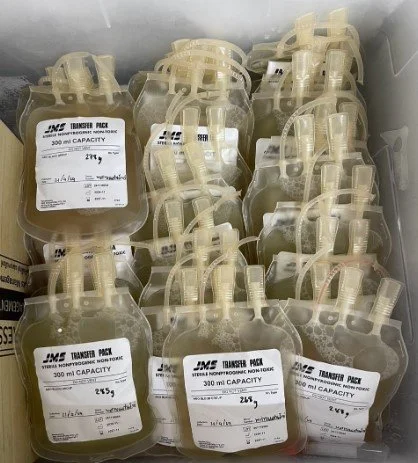
Left: The Veterinarian collected blood into a blood bag containing anticoagulant
Right: The collected plasma was stored at -20 degrees Celsius and can be preserved for up to 2 years
The professionals of the Chiang Mai University Mobile Vet Clinic continue to provide top notch care for elephants in all states of health. We are so grateful for their efforts to provide care for Thai elephants of all ages! Donate today to support the care of Thai elephants